
Close Menu
Retail Destination
    • FREE Email Newsletters
    • About Us
    • Advertise
    • Contact Us
    • Subscribe
    X (Twitter)
    Retail Destination
    • News
      • Acquisitions
      • Appointments
      • Facilities
      • F&B
      • Footfall
      • Marketing
      • Store opening
      • Store signing
      • Technology
    • Development
      • Construction
      • Investment
      • Leasing
      • Planning
    • Products & Services
    • Sponsored Content
    • Events
      • Retail Destination Live 2026
      • Sceptre Awards 2025
    • Digital Editions Archive
    X (Twitter)
    Retail Destination
    Analysis

    Almost 10,000 chain stores disappeared in 2020

    Iain HoeyBy Iain HoeyMarch 15, 20213 Mins Read
    LinkedIn Facebook Twitter Email
    Share
    Facebook Twitter LinkedIn Email

    Almost 10,000 chain stores disappeared from retail locations in 2020 in the UK, according to PwC research compiled by the Local Data Company (LDC).

    In total, 7,655 shops opened, compared to 17,532 closures – a net decline of  9,877. Although a decline was to be expected due to the pandemic, this is the worst ever annual deficit, with an average of 48 chain stores closing every day, and only 21 opening. 

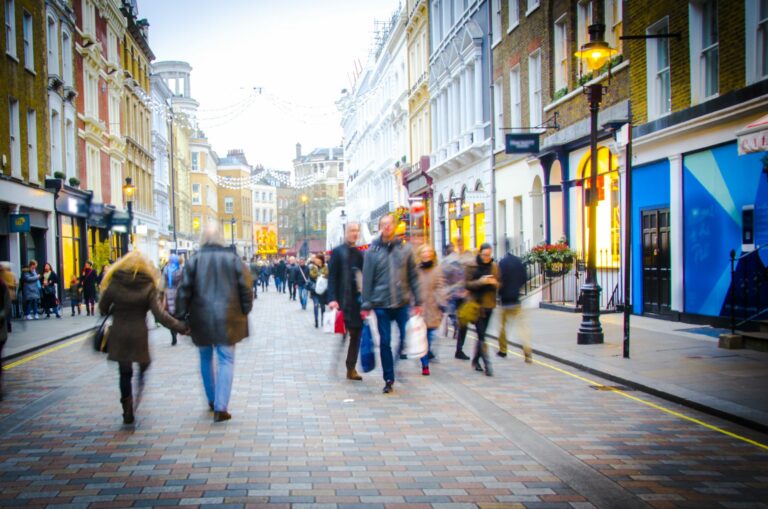
    Retail parks have seen the smallest number of net closures of any location (453), compared to high streets (4,690) and shopping centres (1,791).

    Small towns, which have long been in decline at the expense of more populous areas and cities, are now also enjoying a mini-renaissance as consumers are now more likely to shop in these locations, and larger retailers want to be there.

    Lisa Hooker, consumer markets lead at PwC, said: “For the first time, we’re seeing a widening gap between different types of locations: city centres and shopping centres are faltering, but certain retail parks with the right customer appeal are prospering. 

    “Location is more important than ever as we see a reversal of historical trends. For years, multiple operators have opened more sites in cities and closed units in smaller towns. As consumer behaviours and location preferences change, partly as a result of COVID-19, retailers are moving to be where they need to be. Small towns will remain important but we can expect recovery in cities as workers and tourists return, albeit in smaller numbers adopting more flexible working models.

    “The full extent will be revealed in the coming months as many of the CVAs and administrations in the early part of 2021 still haven’t been captured, including department stores, fashion retailers and hospitality operators that will leave big holes in city centre locations. Retail and leisure operators must take action to ensure they are in the right places, so they’re not left surrounded by empty units and shopfronts. 

    “However, there will be big opportunities for growth into the gaps that are emerging. After the global financial crisis we saw growth of discounters and foodservice chains that replaced exiting retailers. There is an opportunity for operators who can find the right location at the right time to thrive, even despite the current uncertainty.”

    Industry comments

    Melissa Minkow, Retail Industry Lead at CI&T, said the future of the high street will lie in connected retail approaches, where physical stores complement an online offering, versus the other way around.

    She said: “Now that consumers are more comfortable ordering online and picking up in person, many brick and mortar stores would serve best as micro fulfilment centres or appointment-only platforms centring the customer service experience (whether that’s via virtual consultations or in-person post-lockdown).

    “The high street hasn’t lost its status as a destination, but consumers’ pandemic-induced desires to “get in and get out” quickly will have to be indulged by tech-assisted, convenience-oriented purchase experiences.”

    Rob Shaw, MD EMEA, Fluent Commerce, said that the pandemic has fast forwarded a lot of the pain these retailers are now experiencing, but isn’t the underlying cause: “We (consumers) haven’t stopped spending on retail products. The way we do, though, has.

    Following this shift, employers really need to make sure that their staff is adaptable and flexible. Savvy retailers should add store stock to their distribution network, with services like ship from store or curb-side collections to draw down excess instore stock. This also means they can fully stock their stores without the risk of losing the value of the stock.”


    Previous ArticleDrive-in cinema heads for Bluewater
    Next Article Retail footfall surges by 7%
    Iain Hoey

    Read Similar Stories

    Altered Space retained as asset manager following sale of Stanley Square

    February 9, 2026

    Redical’s Clayton Square fully let

    January 28, 2026

    Telford Centre reports continued strong trading and leasing momentum

    January 25, 2026
    Latest News

    Victoria Leeds admits Randox Health for regional debut

    March 3, 2026

    CACI unveils 2026 retail trends 

    February 27, 2026

    Luton Point to host charity sleep out

    February 27, 2026
    Sponsored Content

    What type of EV charger is right for your retail destination?

    December 1, 2025

    Prepare for LiftPod: the indoor elevation device of the future

    November 1, 2025

    How Retail Sites Can Build Safer, Greener Communities Through EV Charging

    October 1, 2025
    © 2026 Lewis Business Media. All Rights Reserved.
    Lewis Business Media, Suite A, Arun House, Office Village, River Way, Uckfield, TN22 1SL

    Privacy Policy | Cookie Policy | Terms & Conditions

    • Retail Destination Live
    • Sceptre Awards

    Type above and press Enter to search. Press Esc to cancel.

    Retail Destination
    Managing Your Privacy

    To provide the best digital experience, we use cookies to store and/or access device information. Consenting to our use of cookies allows us to process data such as reading behaviour. Not consenting or withdrawing consent, may adversely affect certain features and functions.

    Functional Always active
    The technical storage or access is strictly necessary for the legitimate purpose of enabling the use of a specific service explicitly requested by the subscriber or user, or for the sole purpose of carrying out the transmission of a communication over an electronic communications network.
    Preferences
    The technical storage or access is necessary for the legitimate purpose of storing preferences that are not requested by the subscriber or user.
    Statistics
    The technical storage or access that is used exclusively for statistical purposes. The technical storage or access that is used exclusively for anonymous statistical purposes. Without a subpoena, voluntary compliance on the part of your Internet Service Provider, or additional records from a third party, information stored or retrieved for this purpose alone cannot usually be used to identify you.
    Marketing
    The technical storage or access is required to create user profiles to send advertising, or to track the user on a website or across several websites for similar marketing purposes.
    • Manage options
    • Manage services
    • Manage {vendor_count} vendors
    • Read more about these purposes
    Cookie Preferences
    • {title}
    • {title}
    • {title}